
From May 15 to 16, 2024, WDF invited professional instructors to provide the IATF 16949:2016 Core Quality Tools training course for company employees. The training focused on the review and update of the company’s quality management system.
From May 15 to 16, 2024, WDF invited professional instructors to provide the IATF 16949:2016 Core Quality Tools training course for company employees. The training focused on the review and update of the company’s quality management system.
The establishment of the IATF 16949:2016 standard aims to harmonize different assessment and certification systems within the global automotive supply chain, while respecting and meeting the orientation of automotive customers and their specific requirements.

The five core quality tools of quality management, also known as the five quality management tools, include:
· Advanced Product Quality Planning (APQP)
· Failure Mode and Effects Analysis (FMEA)
· Measurement System Analysis (MSA)
· Production Part Approval Process (PPAP)
· Statistical Process Control (SPC)
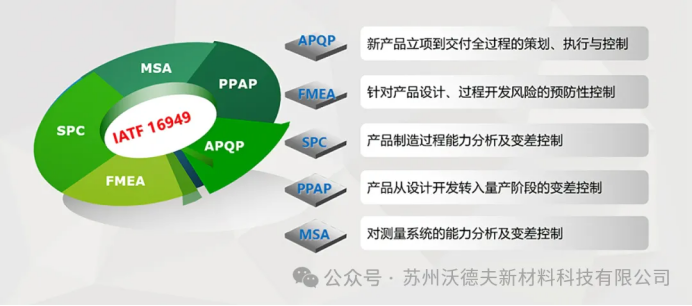
This training was a standardization and update of the company’s quality management system. The course covered three major sections: APQP, FMEA, and PPAP.
Relevant new and existing employees in corresponding positions, as well as employees who were available to participate, received training and knowledge reinforcement. After the training, the audit documents currently used by the company were revised and updated.

· Training
During the course, the instructor carefully analyzed the key points of each process and the reasons behind each requirement, helping employees understand the purpose of establishing each section.
APQP:
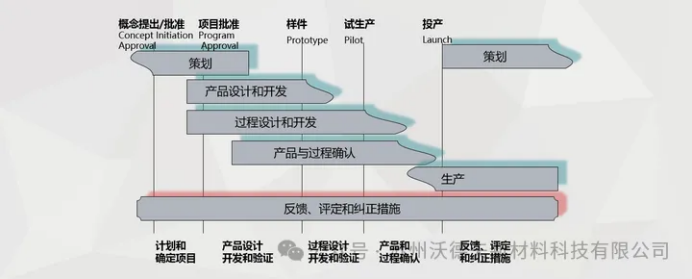
Planning, execution, and control of the entire process from new product development to delivery. APQP is like the skeleton of the human body, supporting and connecting the operation of all tools.
Other tools play different roles at different stages under the support of this structured approach.
The general product development process includes the following steps:
FMEA:
Primarily applied during the product design and process design stages, which are the second and third stages of APQP. Common types include DFMEA (Design Failure Mode and Effects Analysis) and PFMEA (Process Failure Mode and Effects Analysis).
Before a product officially enters mass production, FMEA is used to analyze each step of the subsystems, components, and processes that make up the product, identify all possible risks, and implement preventive measures based on the evaluation results.
PPAP:
PPAP is triggered during the fourth stage of APQP (Product and Process Validation). PPAP is required for the submission of any new parts and for the approval of any modifications to existing parts or processes.
PPAP requirements are generally divided into five levels.
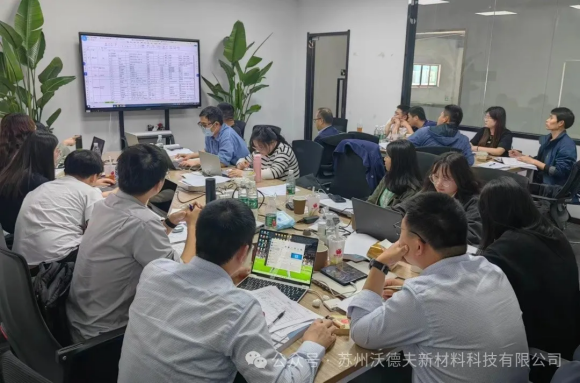
After completing the learning of each process section, the instructor also used the audit forms currently used by WDF as case studies, identifying problems through point-to-point analysis and explaining how to revise the audit forms according to the new standards, along with improvement suggestions.
Before the meeting concluded, participating employees completed a test to deepen their understanding and knowledge of the training content.
· Case Explanation
This training provided support for WDF’s revision and update of audit documents. It also provided quality assurance and a strong foundation for WDF to face future system audits and customer audits.

Through this training, WDF will continue to strengthen the standardized management of the company’s evaluation processes, improve employees’ understanding of the IATF 16949:2016 standard, and enhance the implementation of standardized management within the automotive industry.
This will further improve WDF’s control over product quality, ensure the quality assurance of products that meet customer requirements, and strengthen the company’s own strict management supervision.