
The food safety of POK is not only reflected in the fact that its production sources are safe and environmentally friendly, but also in the fact that it has passed various food safety certifications.
Safe and Traceable
The food safety assurance of POK is not only reflected in the fact that its production sources are safe and environmentally friendly, but also in the fact that it has passed various food safety certifications. In addition to obtaining certifications such as FDA, ACS, NSF 61, and W270 in markets including Europe and the United States, POK was officially approved on March 2, 2023, to meet China’s national standard — GB4806.6. It has been included in the approved list of new resin varieties for food contact materials and products. The product name submitted by POK for certification is: Carbon Monoxide-Ethylene-Propylene Terpolymer.
▪ Polyketone (POK / PK): Polymerized from carbon monoxide, ethylene, and propylene:

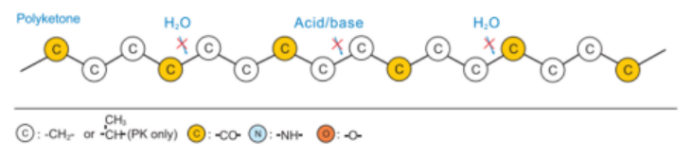
This unique molecular structure gives POK materials excellent chemical resistance, outstanding wear resistance, hydrolysis resistance, and excellent low-temperature performance. The material features low VOC and high barrier properties, making it a diversified high-performance, low-carbon, and environmentally friendly material.
POK’s Green and Low-Carbon Advantages Are Mainly Reflected in Its Raw Material Sources:
The raw materials for POK production include carbon monoxide, one of the major sources of air pollution. For every 50,000 MT of POK produced, 25,000 MT of carbon monoxide can be consumed, which is equivalent to the purification effect of 3.8 million pine trees. (A 30-year-old pine tree can purify 6.6 kg of carbon dioxide per year.)
— Source: National Institute of Environmental Research (South Korea)

This enables POK to have a relatively significant low-carbon emission value at the early stage in LCA evaluation systems, reducing greenhouse gas emissions from the source. Meanwhile, POK materials have good recycling potential. Their recyclability and long service life reduce environmental impact and are fully aligned with the concept of low-carbon and sustainable development.
At the same time, WDF implements ESG strategies and is committed to achieving sustainable development in environmental, social, and governance aspects throughout production and operations. The use of low-carbon and environmentally friendly materials such as POK aligns with our sustainability philosophy and can effectively reduce the carbon footprint generated during manufacturing. Meanwhile, we actively focus on and ensure employee welfare and safety, emphasize corporate transparency and ethical conduct, and ensure the effectiveness and compliance of corporate governance structures.
About GB4806.6
GB 4806.6 is one of China’s standards for food contact materials and products. Its official name is: National Food Safety Standard — Plastic Resins for Food Contact Use. This standard was issued by China’s National Health and Family Planning Commission (now the National Health Commission). It aims to ensure the safety and quality of plastic resins used for food contact and protect consumer health.
* Plastic Products GB 4806.7-2023
This standard officially came into effect on September 6, 2024. It integrates GB 4806.6 (plastic resin raw materials) and GB 4806.7 (plastic resin products), and also adds the category of starch-based plastics.
Scope of Application
Applicable to resins and resin blends used for manufacturing plastic materials and products intended for food contact, including non-vulcanized thermoplastic elastomer resins and their blends.
Basic Requirements
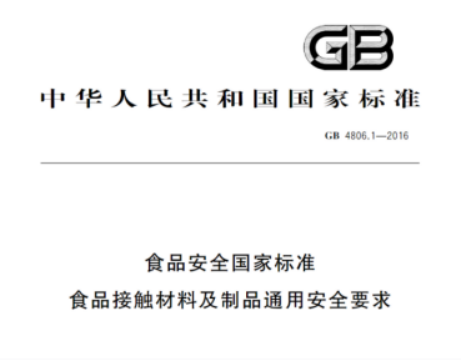
Plastic resins used for food contact shall comply with the requirements of GB 4806.1.
* GB 4806.1 is China’s strict standard for food contact plastic resins, covering chemical composition, migration tests, specific migration limits (SML), total migration limits (TML), and other aspects.
Through certification under this standard, POK materials can ensure that no harmful substances are released when in contact with food, meeting national food safety regulatory requirements.
Technical Requirements
● Raw Material Requirements
The raw materials used for producing plastic resins intended for food contact shall ensure that plastic products do not cause harm to human health under normal and expected conditions of use.
The permitted resins shall comply with the requirements specified in Appendix A and relevant announcements.
● Sensory Requirements
Sensory: Normal color and appearance, with no abnormal odor, impurities, or other undesirable substances.
Soaking Solution: The soaking solution obtained from migration tests shall not show obvious changes in sensory properties, such as coloration, turbidity, precipitation, abnormal odor, or other deterioration.
Additives
Additives shall comply with the requirements of GB 9685 and relevant announcements.
Product Information
1. Product Identification Information Product identification information shall be clear and accurate and shall not mislead users.
2. Products shall provide sufficient product information, including labels, instructions, and other identification information, as well as product qualification certificates, to ensure that sufficient information is available for the safety assessment of food contact materials and products.
3. Identification information shall include product name, material type, declaration of compliance with relevant regulations and standards, name, address, and contact information of the manufacturer and/or distributor, production date, and shelf life (where applicable).
4. Declaration of Compliance The declaration of compliance shall include the regulations and standards followed, the list of substances subject to restrictions and their restriction requirements, and compliance status regarding total migration limits (for molded products).
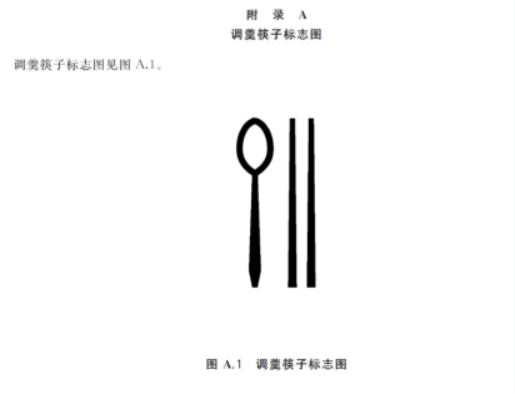
5. In addition to meeting the above requirements, the final products of food contact materials and products shall also be marked with terms such as “for food contact use,” “for food packaging use,” or similar expressions, or shall bear the spoon-and-chopsticks symbol (see Appendix A for details), except for products with clearly defined food contact purposes (such as chopsticks and frying pans). Products with special usage requirements shall indicate methods of use, precautions, intended applications, usage environment, usage temperature, and other relevant information. For products with clearly specified conditions of use in relevant standards, or products that may pose higher food safety risks when used beyond specified conditions, the usage conditions shall be indicated in a special or prominent manner so that users can safely and correctly handle, display, store, and use the products.
6. The above identification information shall preferably be marked on the product or product label, and the label shall be placed in a prominent position on the sales packaging. When technical limitations prevent all information from being displayed on the product or product label, the information may be provided in product instructions or accompanying documents.
Significance of Passing the Certification
Food Safety Assurance:Passing the GB4806.6 standard means that POK materials will not release harmful substances when in contact with food, ensuring food safety. This is especially important for applications involving food contact, such as food processing and packaging.
Compliance with Laws and Regulations:POK materials comply with the requirements of relevant Chinese laws and regulations. This not only enhances the legality and compliance of products in the domestic market but also helps meet strict international standards for food contact materials, improving product competitiveness in global markets.
Quality and Trust:Through testing and certification by food-related certification organizations, the quality of POK materials has been recognized domestically, enhancing customers’ and consumers’ trust and recognition of the products. This helps enterprises establish a positive brand image in the Chinese market and gain more customers and market share.
Market Applications:After obtaining GB4806.6 certification, POK materials can be widely applied in various fields, including food packaging, food processing equipment, kitchen utensils, and other areas. This provides more opportunities and possibilities for enterprises to expand markets and develop new products.

Application Examples
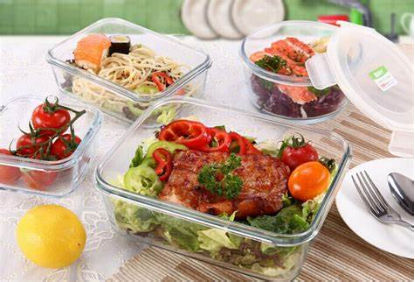
The excellent performance, safety, and environmental protection characteristics of POK enable it to be widely applied in food contact fields.
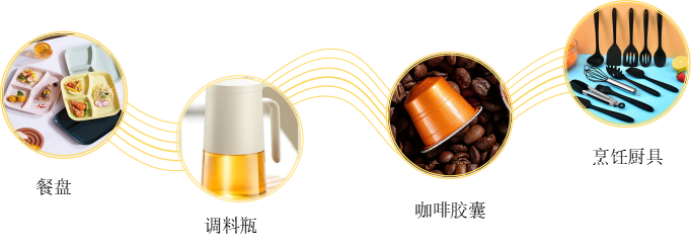
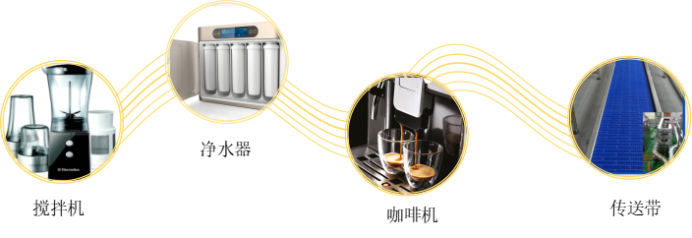
With increasing consumer attention toward food safety and environmentally friendly materials, as well as POK materials’ low-carbon emissions during processing meeting the requirements of modern sustainable development, market demand for POK materials continues to grow. In the future, we will further expand the potential applications of POK materials in emerging fields related to food contact, such as smart kitchen equipment and new food packaging materials, further promoting market development and expansion. This initiative not only demonstrates our commitment to low-carbon environmental protection and ESG principles but also meets the diverse needs of the current market.