
In the modern food industry, material selection is crucial to ensuring product quality and safety. Polyketone (POK or PK), as a new high-performance engineering plastic, has become an ideal material for food-grade applications due to its excellent properties and wide range of application scenarios.

In the modern food industry, material selection is crucial to ensuring product quality and safety. Polyketone (POK or PK), as a new high-performance engineering plastic, has become an ideal material for food-grade applications due to its excellent properties and wide range of application scenarios.
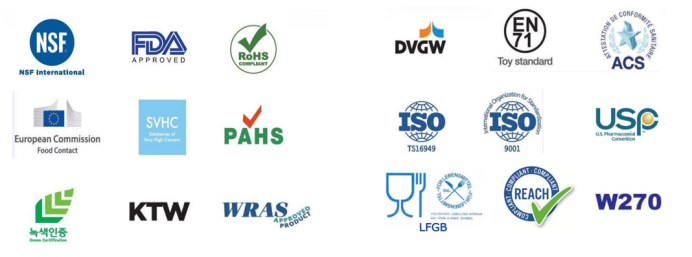
As a green and environmentally friendly material, PK has passed multiple international standard certifications, ensuring its safety and reliability in food-grade applications. PK materials comply with the strict requirements of the U.S. Food and Drug Administration (FDA) and have obtained certifications from Germany’s DVGW W270 and the European Union Restriction of Hazardous Substances Directive (RoHS). These certifications not only demonstrate the safety and environmental characteristics of PK materials but also provide solid assurance for their application in global markets.
Material Properties
● Green and environmentally friendly, free of harmful substances, with low VOC emissions
● Excellent impact resistance over a wide range of application temperatures
● Outstanding chemical resistance, fuel resistance, and hydrolysis resistance
● Excellent wear resistance
● Low water permeability and gas barrier properties
Application Fields
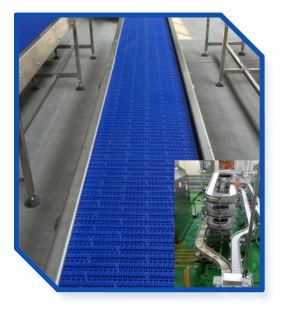
1、Food Processing Conveyor Belts
(1)Excellent strength, toughness, wear resistance, and outstanding mechanical properties: Maintains stability under high impact loads, effectively withstands collision impacts, and is not easily damaged.
(2)Excellent chemical resistance: Except for strong acids and strong bases, PK can withstand most solvents, resist the erosion of various chemical substances, and ensure that contacted food or cleaning agents do not cause dissolution or corrosion of the conveyor belt, enabling long-term use.
(3)Low VOC characteristics: Ensures the safety of food contact during transportation and prevents contamination caused by the release of harmful substances.
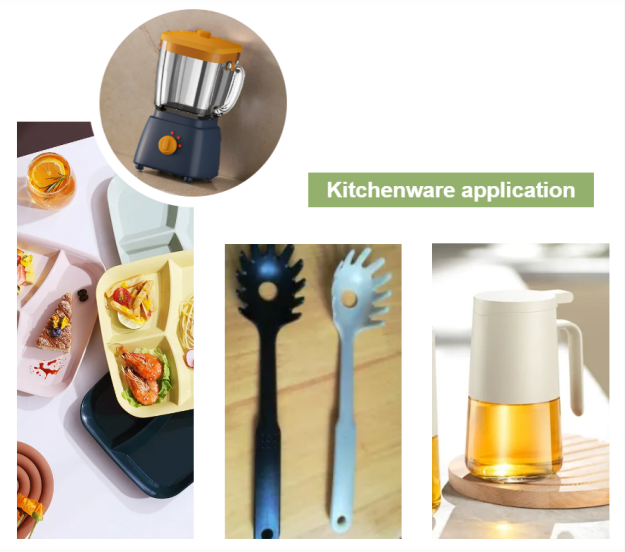
2、Tableware and Kitchen Utensils
(1)High and low temperature resistance: With a wide operating temperature range, PK can maintain good performance in both high and low temperature environments, meeting the requirements for short-term high-temperature resistance in kitchenware materials.
(2)Excellent toughness: Its application in tableware and kitchen utensils is particularly common. For example, it can be used to manufacture plates, spoons, blender couplings, and other products.
(3)Food-grade certifications: Ensure the safety of these products and meet the high-standard requirements of households and the catering industry.
3、Food Packaging Industry
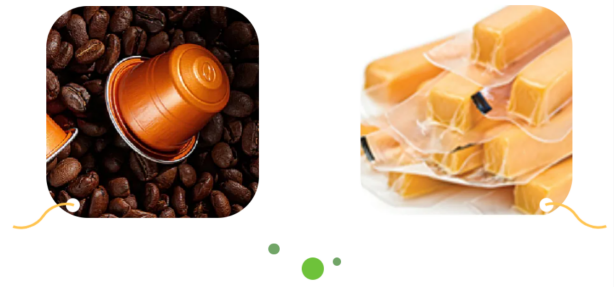
(1)Low VOC: PK does not cause any chemical or harmful substance penetration into food itself, ensuring the safety of the packaged food and human health.
(2)Gas barrier properties: Its excellent sealing performance (comparable to EVOH) can effectively isolate air, moisture, and odors, significantly extending the shelf life of food and preventing food deterioration caused by long-term exposure to air, water vapor, and other factors.
(3)Green and environmentally friendly: Traditional plastic packaging materials are usually difficult to degrade and can easily cause environmental pollution. PK materials can be recycled and reused through physical or chemical methods, reducing environmental impact and meeting the requirements of modern society for green production.
Compared with other high-performance engineering plastics, the high cost-effectiveness of PK materials is also one of the reasons why they are widely welcomed in food-grade applications. PK has lower processing costs, maintenance costs, and a longer service life, providing enterprises with economical and efficient solutions. Its excellent performance stability ensures long-term use under various extreme conditions, providing the food industry with a safer and more reliable material choice.
In conclusion, PK materials have become an important material choice in the food industry due to their unique properties and wide range of application scenarios. We will continue to focus on the research, development, and promotion of high-performance, environmentally friendly, and safe PK materials, providing better solutions for the food industry and helping enterprises achieve sustainable development goals.