
PK (polyketone) is a polymer obtained through the copolymerization of carbon monoxide absorbed from the air with ethylene and propylene. With its unique characteristics, including excellent wear resistance and chemical resistance, outstanding impact strength, gas and hydrocarbon barrier properties, and hydrolysis resistance, PK brings technological innovation to various industries such as automotive, electronics and electrical, packaging, and water treatment.
PK polyketone is a polymer obtained through the copolymerization of carbon monoxide absorbed from the air with ethylene and propylene.
With its unique characteristics, including excellent wear resistance and chemical resistance, outstanding impact strength, gas and hydrocarbon barrier properties, and hydrolysis resistance, PK brings technological innovation to various industries such as automotive, electronics and electrical, packaging, and water treatment.
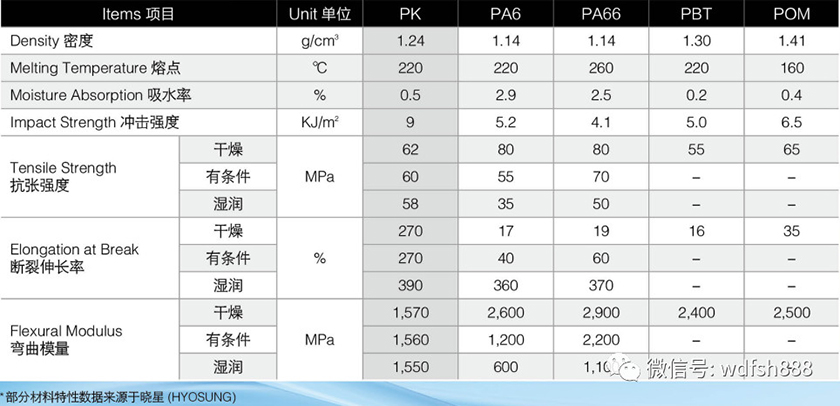
Basic Characteristics: The specific gravity of PK material is 12% lower than POM and 6% lower than PBT. Its molecular structure determines its outstanding toughness and impact resistance. Under different conditions, its mechanical strength changes only slightly, and its performance stability is superior to other conventional engineering plastics.
Wear Resistance
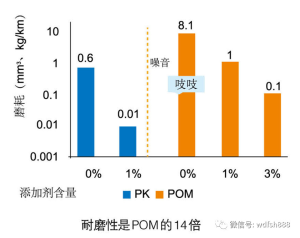
As a new engineering plastic with outstanding wear resistance, PK demonstrates wear performance 14 times higher than POM. Due to its long-term dimensional stability and low sensitivity of strength to humidity, PK can be used in applications such as pulleys, gears, and bearing bushings to replace materials such as POM and nylon, improving product service life and reducing noise to a certain extent.
Hydrolysis Resistance
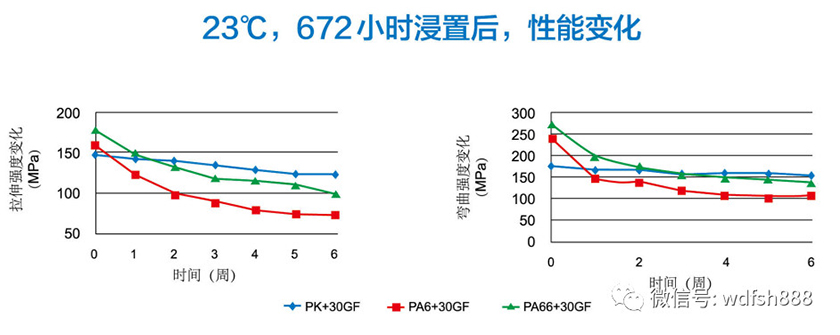
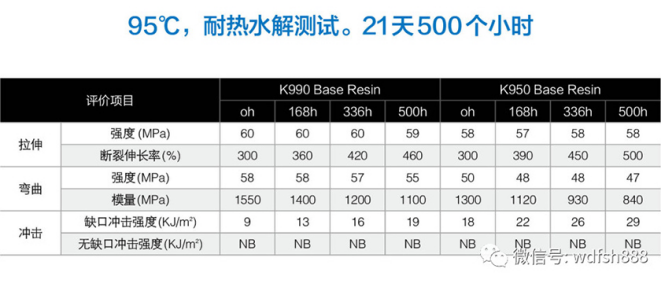
At room temperature (23°C), after long-term water immersion, PK materials show significantly smaller changes in mechanical properties compared with nylon and polyester-based materials. Its excellent long-term hydrolysis resistance is basically comparable to PPS and PPO. After long-term immersion in hot water at 95°C, the decrease in mechanical properties is also very small, demonstrating excellent hydrolysis resistance. In summary, whether in room-temperature water or hot water environments, PK exhibits excellent creep resistance and dimensional stability. Therefore, it can replace nylon in applications such as automotive water chambers, intercoolers, and hot water meters.
Barrier Properties
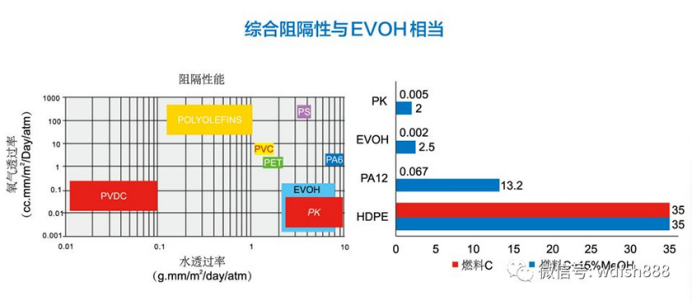
PK has excellent barrier properties. Whether against water, oxygen, or organic substances, it demonstrates outstanding barrier performance, which is basically comparable to EVOH. Products requiring barrier properties can be manufactured through different processing methods such as extrusion, injection molding, and blow molding. PK has broad application prospects in automotive fuel systems, packaging films, cosmetic packaging materials, and other fields.
Low VOC & Low Odor
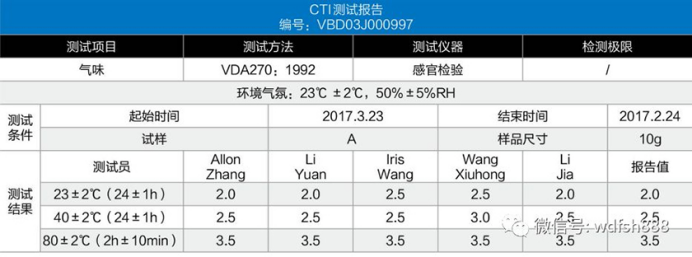
Due to its unique production process and environmentally friendly formulation, PK generates very few small molecule precipitates and volatile substances. It basically contains no pentachlorophenol and formaldehyde, meeting the low VOC standards of various automotive manufacturers worldwide.
Meanwhile, its low odor characteristics allow it to easily pass odor level tests such as VDA270. PK is suitable for replacing POM, ABS, and other materials in automotive interiors. It is a green and environmentally friendly new material with low odor and low volatility.
UV Resistance
After weather-resistant modification, PK’s UV resistance is improved, maintaining a high strength retention rate during long-term use and helping extend product service life. It can replace PA, ABS, PC, and other materials for long-term outdoor applications.
Heat Stability
PK can withstand long-term operating temperatures of up to 125°C. Test results show that the material maintains a high mechanical strength retention rate at this temperature, making it suitable for replacing nylon, polyester, and other materials in applications such as components around engines.
Electrical Insulation
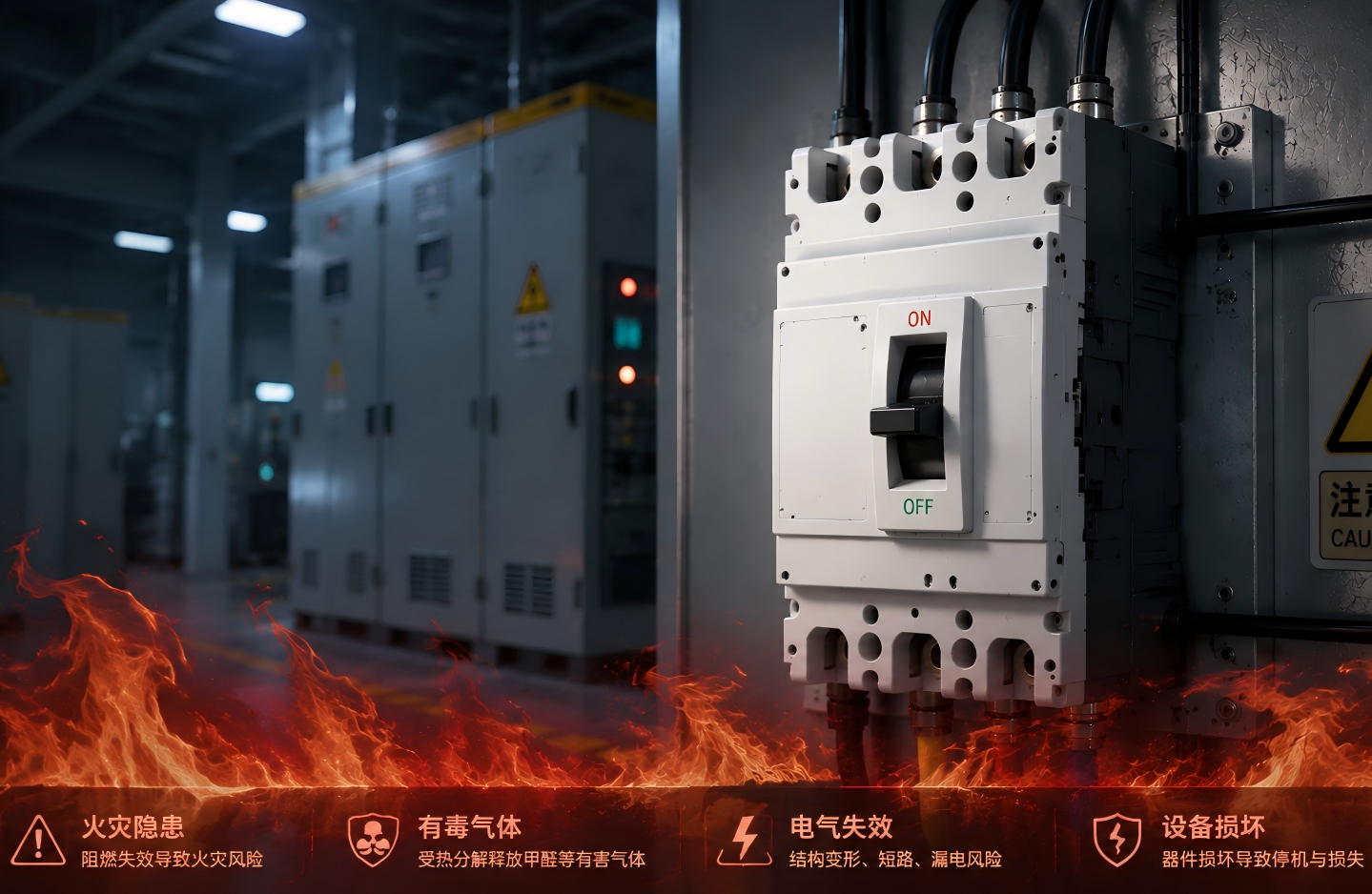
PK has low moisture absorption and excellent electrical insulation properties. After long-term immersion in cold and hot water, its electrical resistance retention rate is higher than that of nylon. Therefore, it can be used in applications such as circuit breakers, electronic connectors, and railway fasteners as a replacement for nylon.
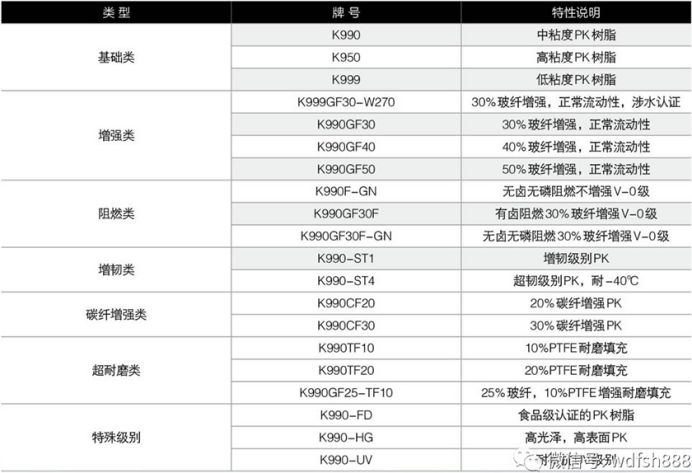
PK Grades and Characteristics Description
Choose WDF
WDF was one of the first companies in China to promote modified polyketone materials. By choosing WDF, we provide you with one-stop water-contact material solutions, full-process technical support, and on-site guidance!
— Original manufacturer channel! Stable supply! Fast response! Technical support!
— Hyosung & WDF jointly provide you with high cost-performance replacement solutions!