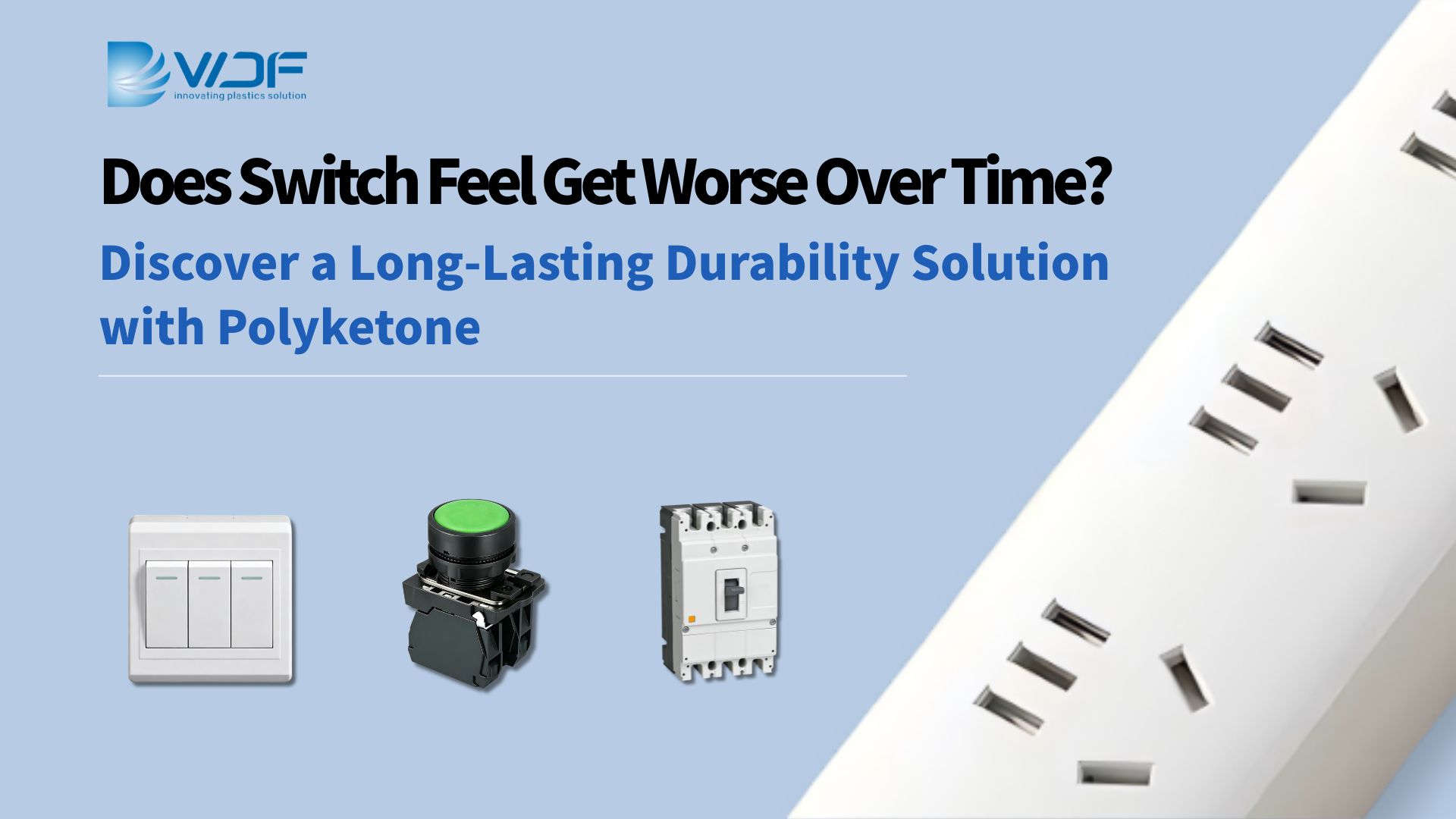

From a structural design perspective, PK has a high degree of compatibility with POM and can cover typical application scenarios such as gears, sliders, bearings, and buttons. It enables material replacement without mold modification, offering relatively low application introduction costs.
The Electrical Standard Challenges Faced by POM
In structural components used in industrial equipment, precision automation, automotive parts, household electrical appliances, and industrial control equipment, POM (polyoxymethylene/acetal) is widely recognized as a “classic material” in the industry. With its comprehensive advantages of high stiffness, low friction, excellent wear resistance, dimensional stability, and easy injection molding, POM has been the material of choice for conventional structural components such as gears, sliders, bearings, and equipment buttons for many years. A large number of companies have achieved mass production based on mature POM application experience, which has also led to relatively established and standardized material selection practices.
However, in recent years, the logic behind material selection has been changing. With increasingly stringent electrical fire safety requirements, performance indicators such as UL94 V-0 flame retardancy and glow-wire ignition temperature (GWIT) have shifted from being “added value” features to becoming basic entry requirements for electrical structural components. POM materials selected based on traditional experience are gradually revealing their performance limitations under the new standards, while conventional flame-retardant POM solutions are facing a dilemma between performance retention and compliance.
Against this background, modified PK (polyketone) materials are gradually entering the material selection scope for structural components and becoming one potential upgrade pathway for POM.
From a structural design perspective, PK has a high degree of compatibility with POM and can cover typical application scenarios such as gears, sliders, bearings, and buttons. It enables material replacement without mold modification, offering relatively low application introduction costs.
Why Can Flame-Retardant POM Not Achieve Both Performance and Safety?
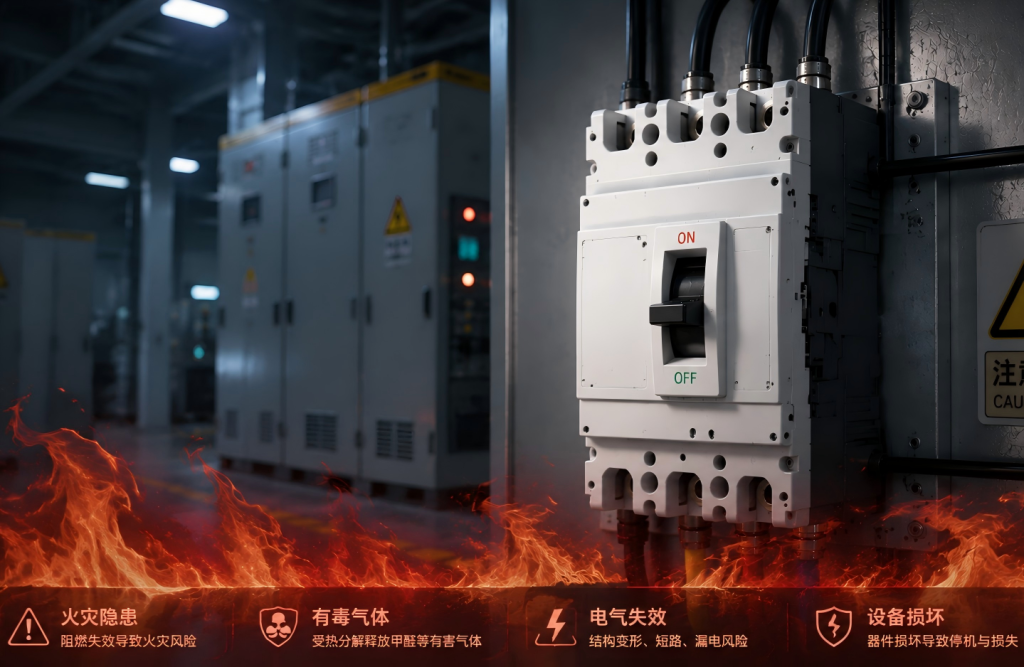
Under the background of upgraded electrical safety requirements, many companies have attempted to modify POM by adding flame retardants. However, the results often fall short — flame retardancy improves, but mechanical performance declines. This is not due to insufficient modification technology, but rather because the molecular structure of POM itself makes it difficult to adapt to upgraded electrical safety evaluation systems.
The molecular chain of POM consists of an alternating (-CH₂-O-)ₙ structure. The arrangement of carbon, hydrogen, and oxygen elements within the molecular chain makes POM inherently flammable. When heated to around 240°C, the material is prone to depolymerization reactions, releasing formaldehyde. Formaldehyde is not only combustible but also continuously promotes the chain reaction of combustion, making flame self-extinguishment more difficult and significantly increasing combustion control challenges.
In addition to the structural limitations of the material itself, traditional flame-retardant systems also face compatibility challenges when used in POM:
- Due to the relatively low decomposition temperature of POM (approximately 240°C), halogen-based and phosphorus-based flame-retardant systems may not have sufficient time to function effectively before the material begins to decompose.
- Intumescent flame-retardant systems have difficulty forming stable char layers during POM combustion and may also cause dripping behavior. The flowing molten material can increase the risk of igniting surrounding materials.
- Compatibility issues between flame retardants and the POM matrix have long existed. After introduction, certain acidic or alkaline flame-retardant components may affect the crystallization behavior and processing stability of POM, resulting in surface defects such as silver streaks and bubbles, while significantly reducing POM’s original wear resistance.
Breaking Through the POM Flame-Retardant Challenge, PK Achieves Dual Upgrades in Safety and Low Carbon
Against this demand background, PK material systems are gradually gaining attention in more structural component applications. The design logic of PK in structural applications overlaps significantly with POM and can cover typical structural component applications such as gears, sliders, bearings, and buttons.
Flame Retardancy:
Halogen-free flame-retardant PK materials can meet UL94 V-0 requirements and comply with environmental certifications such as RoHS and REACH. During combustion, they do not generate toxic smoke. This characteristic makes them more suitable for structural applications with increasingly demanding safety requirements and provides stronger adaptability compared with POM systems under flame-retardant constraints.

Wear Resistance:
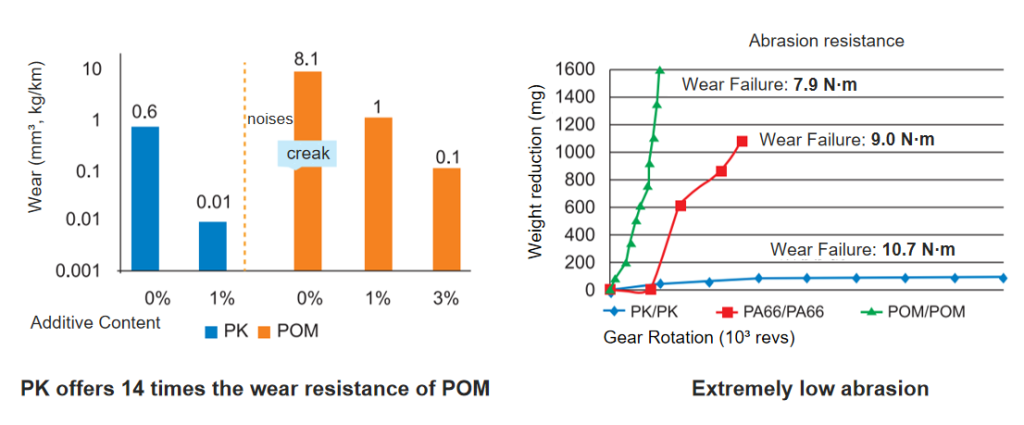
Wear resistance has long been one of the key advantages of POM. Under the same testing conditions, PK demonstrates approximately 14 times higher wear resistance than POM while also providing good noise reduction performance during operation, making it suitable for components involving long-term friction and transmission.
Chemical Resistance:
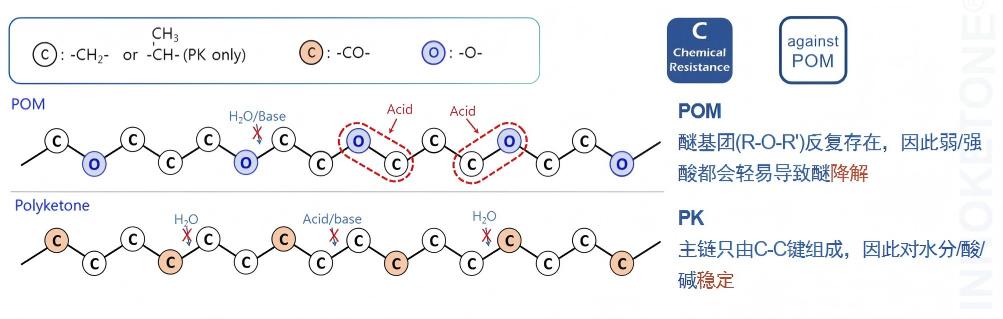
The main chain of POM contains ether groups (R-O-R’). Under weak acid conditions or humid environments, ether bonds are prone to degradation. Long-term exposure to cleaning agents and lubricants may lead to embrittlement, cracking, and strength degradation. In contrast, the main chain of PK consists of stable C-C bonds without easily degradable functional groups, providing outstanding resistance to hydrolysis, weak acids, and organic solvents, with more stable performance under complex industrial operating conditions.
Molding Shrinkage:
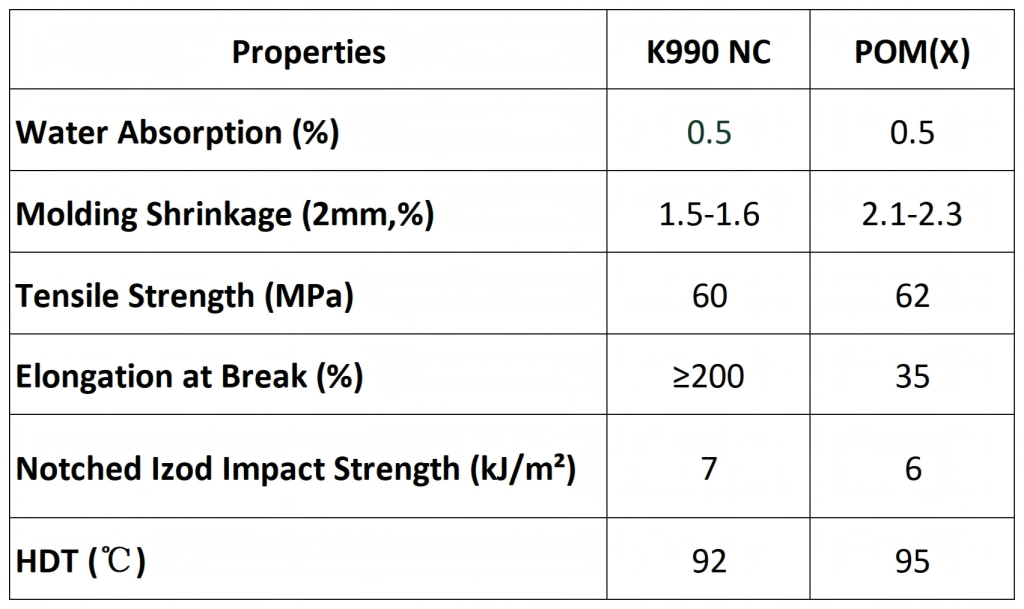
The cost challenge of material replacement lies in additional losses caused by mold modification, process adjustment, and dimensional deviations. PK has low water absorption (approximately 0.5%), resulting in lower fluctuations in dimensions and performance under complex environments involving temperature changes and alternating dry/wet conditions. Meanwhile, its molding shrinkage is close to that of POM, providing good dimensional compatibility during injection molding. When switching from POM to PK, existing molds can generally be used directly.
Mechanical Performance
PK provides high impact toughness and structural strength, maintaining stable mechanical performance while meeting flame-retardant requirements.
Comparison of Selected Physical Properties Between WDF K990 NC and a Conventional POM Grade
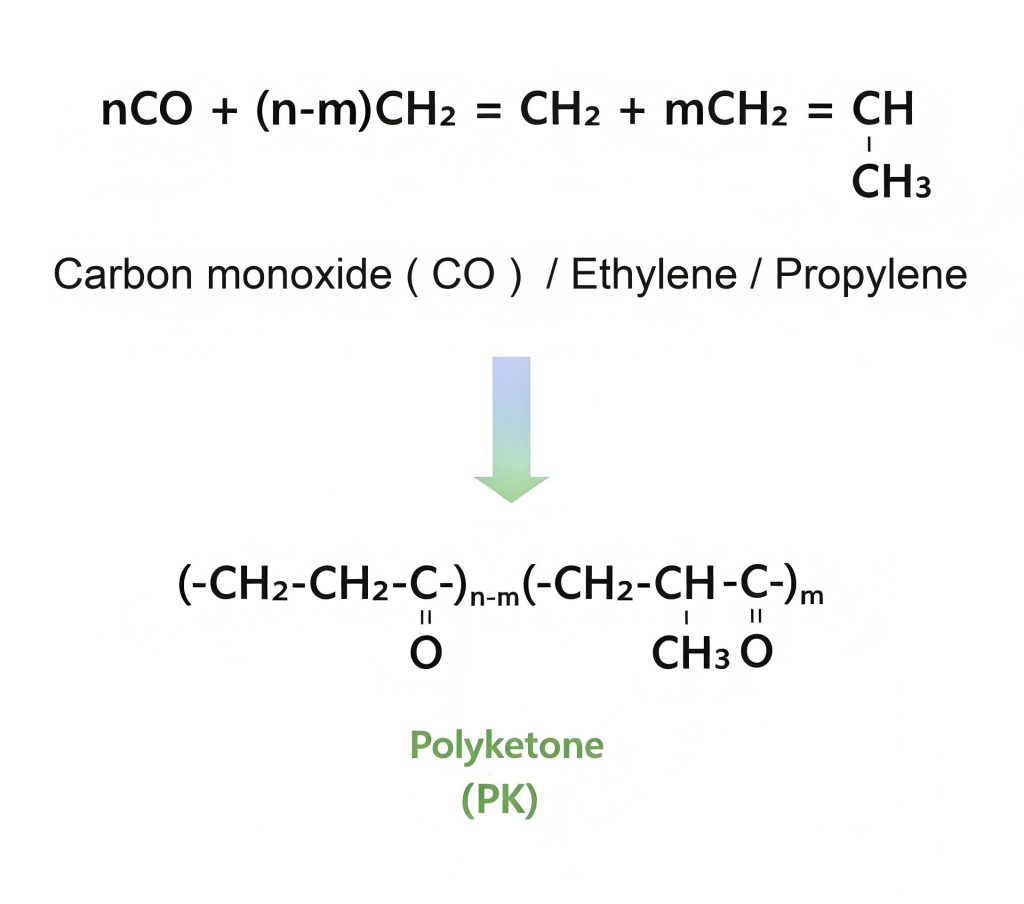
In addition, PK is a new environmentally friendly material synthesized from carbon monoxide, ethylene, and propylene. Its raw material pathway and synthesis process provide relatively lower carbon emission characteristics.
Compared with traditional engineering plastic systems, PK demonstrates certain low-carbon advantages from the initial stage of its lifecycle, helping companies achieve low-carbon compliance upgrades and supporting the current green transformation of the manufacturing industry.
Typical Application Scenarios
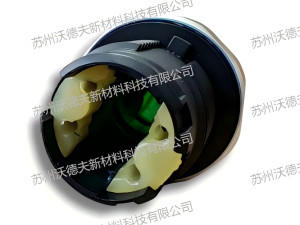
For components such as industrial controller buttons, electrical connectors, circuit breakers, and miniature gears that require both wear resistance and flame retardancy, halogen-free flame-retardant PK fills the performance gap of traditional POM and addresses electrical fire safety challenges.
Operating Conditions Switch
For components such as industrial controller buttons, electrical connectors, circuit breakers, and miniature gears that require both wear resistance and flame retardancy, halogen-free flame-retardant PK fills the performance gap of traditional POM and addresses electrical fire safety challenges.
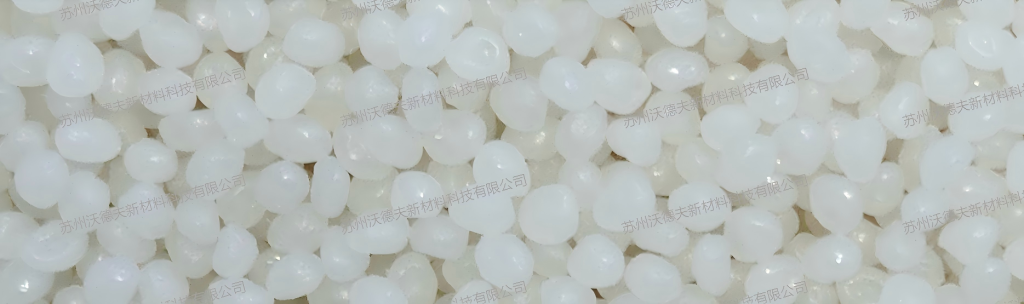
Overall, POM has gained extensive application foundations due to its advantages in wear resistance, stiffness, and dimensional stability. However, as industry safety standards continue to evolve, the limitations of flame-retardant POM, including unbalanced performance and restricted application scenarios, are becoming increasingly evident, revealing existing application bottlenecks.
With relatively low technical transition costs, PK materials provide reliable halogen-free flame-retardant solutions while maintaining the core performance advantages of POM, enabling new material options for applications previously restricted by flame-retardant requirements. For manufacturing companies facing material upgrade demands, PK provides a technically feasible and economically reasonable alternative pathway.